You Can’t Change What Happened to You. But You Can Change What Happens Next.
I recently sat down with Otiri Enathy on The Becoming Podcast to talk about my story.
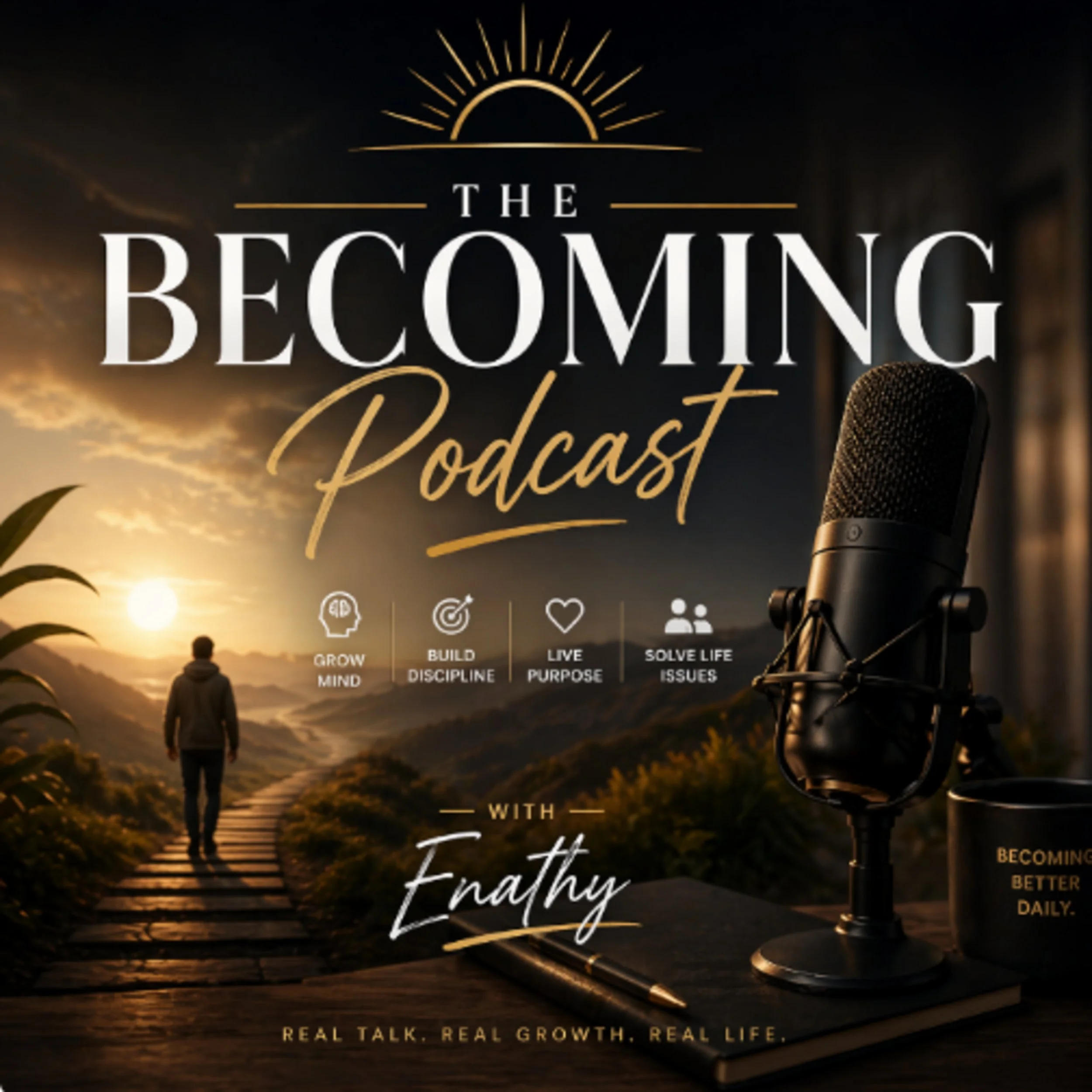
We talked about childhood trauma, addiction, sobriety, marriage, fatherhood, faith, and what it means to become a chain breaker.
But underneath all of those topics was one idea that has become pretty important to me:
You can’t change what happened to you. But you can change what happens next.
That sounds simple.
Living it is a lot harder.
Understanding Your Past Is Not the Same as Excusing Your Behavior
I lost my mother when I was six years old. By eleven, I had experienced the kind of family trauma that no kid should have to understand.
For a long time, I didn't really understand what those experiences had done to me.
I knew what happened. I remembered it.
But knowing your story and understanding how it shaped you are two very different things.
As I got older, I became pretty good at pushing things down. I worked. I built a business. I raised a family. From the outside, I could look successful and functional.
And I drank.
Alcohol became one of the ways I avoided dealing with what was underneath all of that.
It took me a long time to recognize how much my past was affecting the way I handled anger, conflict, relationships, intimacy, and the people closest to me.
Eventually, I came to an uncomfortable realization:
My past could explain my behavior, but it couldn't excuse it.
I couldn't change what had been done to me.
But I was responsible for what I did with it.
Getting Sober Was Only the Beginning
When I was diagnosed with cirrhosis, drinking stopped being something I could rationalize.
I had to make a choice.
I quit.
For a while, I think part of me expected that getting sober would solve the problem.
Instead, sobriety removed the thing I had been using to avoid the problem.
Without alcohol, there was nowhere to hide.
There was anger.
There were emotions I hadn't allowed myself to feel.
There were patterns I had to recognize and relationships I needed to look at honestly.
There were things I needed to take responsibility for.
Getting sober wasn't the finish line. It was the starting line.
That's something I think we sometimes misunderstand about change.
We wait for one big decision to transform our lives.
But the decision is only the beginning.
The real transformation happens in what you do afterward.
You Don't Have to Fix Your Entire Life Today
One of the things Otiri and I talked about was how small commitments helped me start trusting myself again.
Early in sobriety, one of those commitments was going to church once a week.
That might not sound like much.
But I had spent years being pretty wishy-washy about things. I'd show up when it was convenient. I'd make commitments when I felt motivated.
This time, I wanted to keep my word.
So I showed up.
Then I did it again.
And again.
Those small promises matter.
You don't necessarily rebuild your life through one huge moment of motivation.
Sometimes you rebuild it by proving to yourself that when you say you're going to do something, you actually do it.
Becoming a Chain Breaker
Becoming a grandfather changed the way I thought about my past.
For much of my life, I thought about what had happened to me.
Eventually, I started thinking about what could be passed through me.
Pain has a way of traveling through families.
So does addiction.
So do anger, silence, unhealthy relationships, and all the things we learn as children and unknowingly carry into adulthood.
At some point, somebody has to decide:
This stops here.
That's what being a chain breaker means to me.
It doesn't mean pretending your past didn't happen.
It doesn't mean you never struggle again.
And it certainly doesn't mean you have everything figured out.
It means taking an honest look at what shaped you and deciding what you are—and aren't—willing to carry forward.
I couldn't change the childhood I had.
But I could work on becoming a different kind of husband.
A different kind of father.
A different kind of grandfather.
A different kind of man.
What Happens Next Is Built One Choice at a Time
I wish I could say there was a moment when everything clicked and I became a completely different person.
There wasn't.
I'm still learning.
I'm still catching myself.
I'm still working on how I respond when old wounds get touched.
I'm still learning how to be more present with the people I love.
And I'm still learning what it means to surrender the things I can't control and trust God with the rest.
But that's the thing about becoming.
You're never really finished.
You make a choice.
Then you make it again tomorrow.
And eventually, those choices start becoming a life.
That's what Otiri and I talked about on The Becoming Podcast: the things that shaped me, the things I got wrong, and what I've learned while trying to show up differently.
If you're carrying pain from your childhood, struggling with addiction, trying to repair relationships, or wondering whether you've waited too long to change, I hope you'll remember this:
Your past matters.
It deserves to be understood.
It deserves to be felt.
But it doesn't get to make every decision about your future.
You can't change what happened to you.
You can change what happens next.
🎙️ Listen to my conversation with Otiri Enathy on The Becoming Podcast → https://podmatch.com/playepisode?epi_id=179068262045209993adbb4a3