How Childhood Trauma Affects You as an Adult — and How to Cope
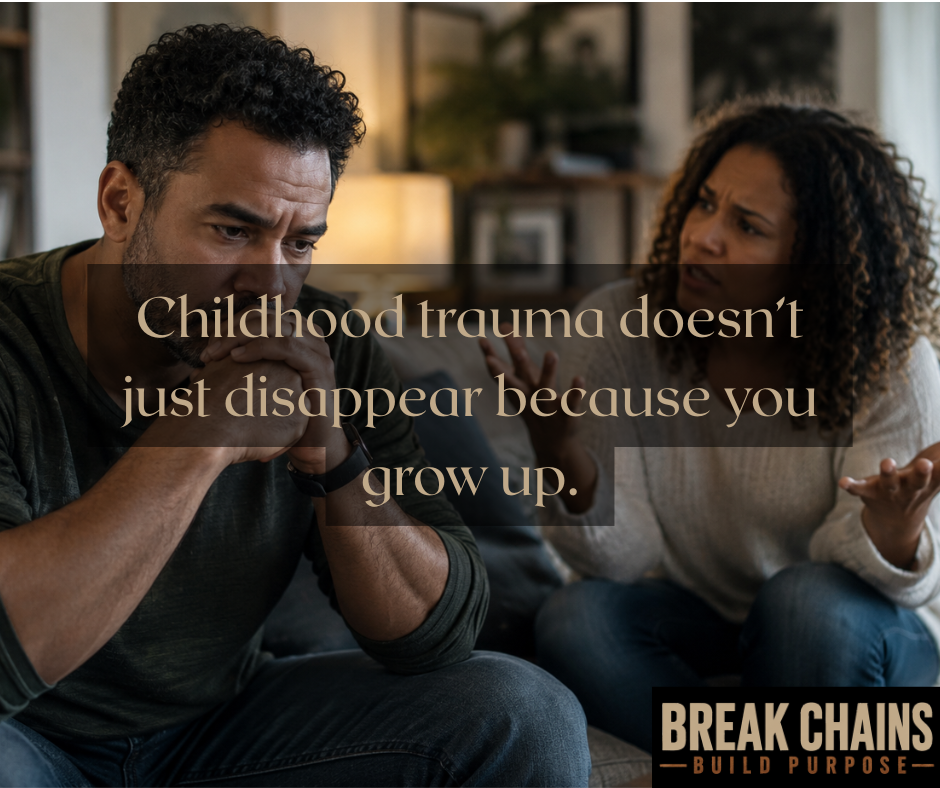
After living through my own childhood trauma and only later in life learning how to understand it, sit with it, feel it, and eventually move forward, I’ve realized something important:
Childhood trauma doesn’t just disappear because you grow up.
When I say feel it, I mean really feel it. From the bottom of your gut. The kind of feeling that can bring you to your knees.
Even years later, childhood trauma can heighten your sensitivity in ways that make everyday life harder to navigate. A disagreement isn't always just a disagreement. A careless word isn't always just a careless word. Sometimes your body and mind react as if something much bigger is happening.
How Childhood Trauma Can Show Up in Adult Relationships
People who never experienced childhood trauma are blessed in ways they may never recognize.
They can have heated conversations, misunderstandings, loud moments, or careless words — and then laugh it off and move on.
Trauma doesn’t always allow that.
For those of us who carry childhood trauma into adulthood, confrontation or misunderstanding with a spouse, child, coworker, or friend can go straight to the gut.
There can be an urgency to fix things immediately, even when nothing is actually broken.
Mentally, it can feel like an alarm goes off during even a simple disagreement, begging:
Please don’t hit my feelings too hard.
The situation happening in front of you may be small. But the feelings it brings up aren't.
Why Small Arguments Can Feel So Big
For many people who experienced childhood trauma, recovering from a small argument becomes a whole internal process.
It's quiet. Private. And very familiar.
Maybe you withdraw. Maybe you replay the conversation over and over. Maybe you immediately try to make everything okay. Maybe you assume someone is angry with you, leaving you, or rejecting you when that's not actually what's happening.
Sometimes those reactions aren't really about the argument you're having today.
They're survival responses you learned a long time ago.
When you're a child, you don't have the tools to understand why certain things are happening around you. You simply learn how to survive them.
Then you grow up — but some of those survival mechanisms come with you.
Learning How to Cope with Childhood Trauma
I don't believe healing means pretending the trauma never happened or reaching some magical point where nothing affects you anymore.
For me, healing has meant learning to understand what's happening inside of me.
It's learning to sit with the feelings instead of immediately running from them.
It's allowing myself to actually feel them, even when they hurt.
It's recognizing when something happening today is touching something much older.
And it's learning how to talk about those feelings openly instead of carrying everything alone.
Sometimes that means getting help. Sometimes it means admitting that what happened to you affected you more deeply than you wanted to believe.
And sometimes it simply means recognizing:
This feeling is real, but it doesn't necessarily mean something is wrong right now.
That distinction can be difficult. But it's important.
Childhood Trauma Doesn't Have to Control Your Life
Childhood trauma can steal your inner peace.
I know because I spent years trying to escape what was happening inside of me instead of understanding it.
But I've also learned that you can begin to take that peace back.
You can learn your triggers. You can understand your reactions. You can talk about what happened. You can ask for help. And little by little, you can stop letting old wounds dictate every moment of your present life.
The past doesn't disappear.
But you can learn how to carry it differently.
And for me, that has been a big part of moving forward.
You Don’t Have to Keep Running From the Past
If any of this feels familiar, I want you to know that I’ve been there.
For years, I tried to outrun the things I didn’t know how to face. Trauma, grief, addiction, mistakes, broken relationships — all of it. Eventually, I learned that moving forward didn’t mean erasing my past. It meant finally being willing to face it.
I share more of that journey in my book, Something Only God Could Do. It’s not a story about having all the answers. It’s the story of what happened when I ran out of places to hide and had to figure out how to rebuild my life.
If you’re trying to make peace with your own past, I hope my story reminds you that you’re not alone.